Discover why coral fragging has become one of the most rewarding skills in reef keeping and how to succeed
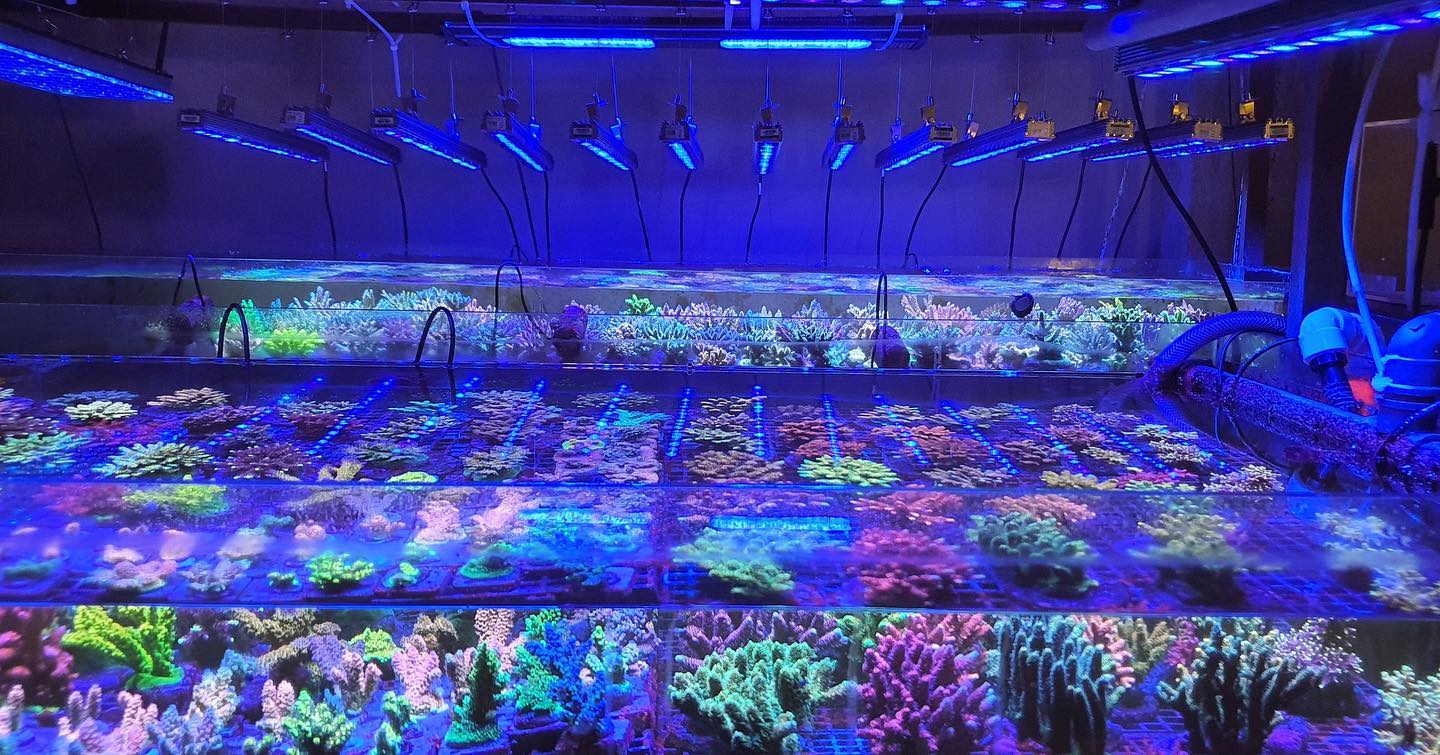
From growing your collection to supporting healthier corals, discover why propagation has become one of the most rewarding skills in modern reef keeping, and why lighting plays a much bigger role than many hobbyists realize.
Every experienced reefer remembers the first time they fragged a coral.
There is always a moment of hesitation before making that first cut.
Will the coral recover? Did you choose the right branch? Will it survive?
Then, a few weeks later, tiny new polyps begin to appear.
The frag starts encrusting its plug, new skeletal growth becomes visible, and what was once a small fragment begins its journey toward becoming a thriving colony.
For many hobbyists, this is the moment reef keeping changes. Instead of simply maintaining corals, they begin actively growing them.
Fragging transforms the aquarium into a living, evolving ecosystem where every healthy colony creates opportunities for new life.
Today, coral propagation has become one of the most rewarding aspects of reef keeping. Not only because it helps build beautiful aquariums, but because it encourages sustainability, strengthens the reefing community, and deepens our understanding of coral biology.
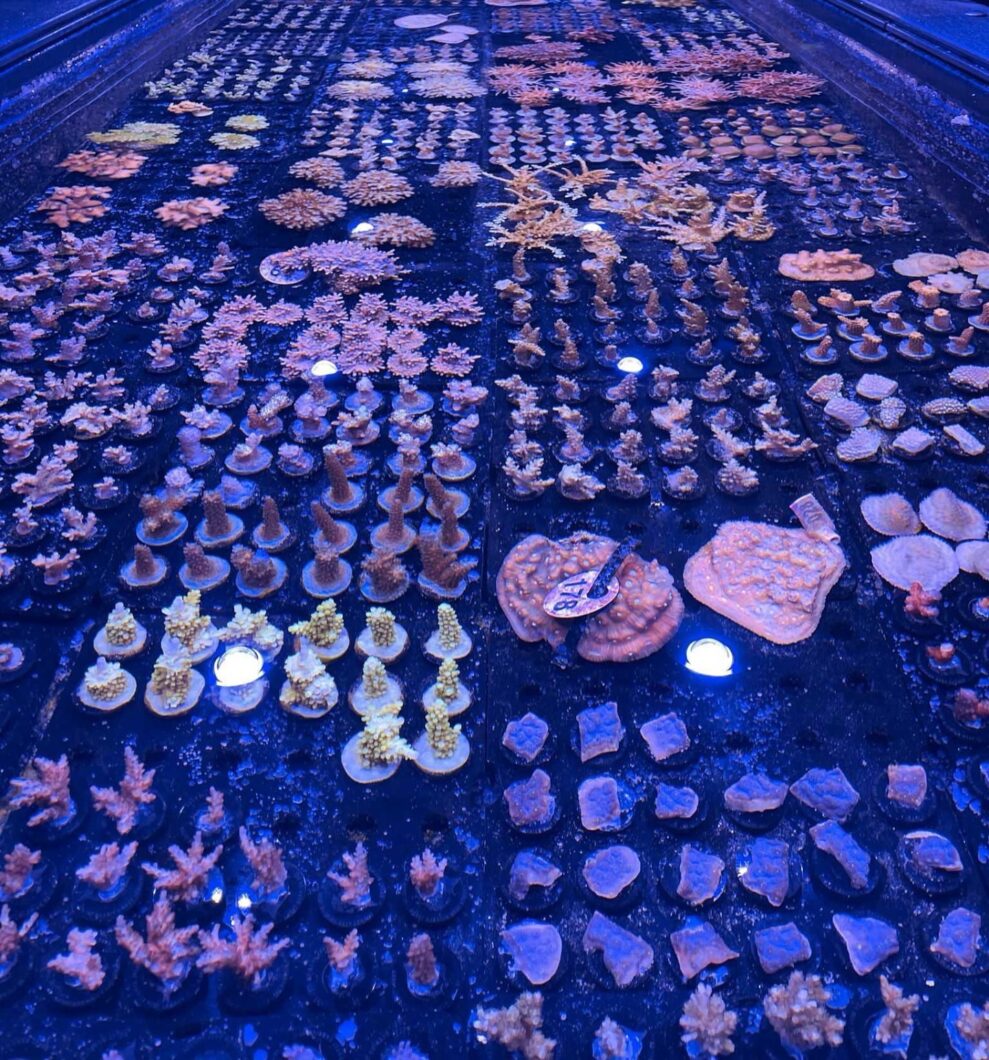
Photo credit: Great Barrier Reef Legacy/ The Forever Reef Project
More Than Just Making More Corals
Many people assume fragging is simply a way to multiply expensive corals.
While that’s certainly one benefit, experienced reefers know it offers much more.
As corals mature, many popular species, including Acropora, Montipora, Euphyllia, and numerous soft corals, can quickly outgrow their available space.
Colonies begin competing for light, water flow, and territory, while larger branches may shade neighboring corals and reduce circulation throughout the aquarium.
Strategic fragging helps maintain a balanced aquascape by controlling colony size, improving water movement, and allowing light to reach areas that might otherwise become shaded.
Rather than being a sign that something is wrong, propagation often becomes part of regular long-term reef maintenance.
Building an Incredible Reef Without Constantly Buying Corals
One reason so many reefers become passionate about propagation is that it changes the way they grow their collections.
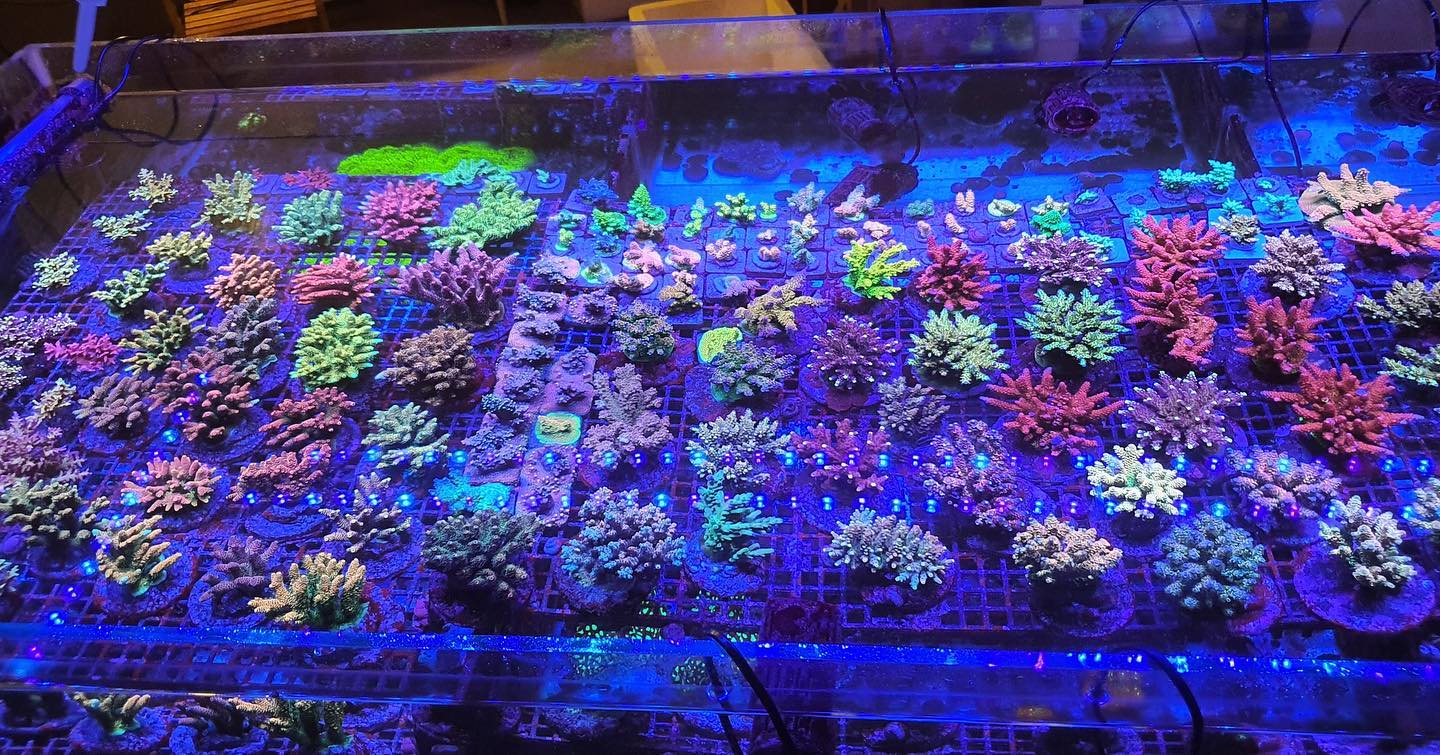
Instead of purchasing large colonies every time they want something new, many hobbyists begin with a handful of healthy frags and gradually build an impressive display through patience and careful husbandry.
Over time, a single thriving colony can provide multiple healthy frags, allowing reefers to expand their aquariums, trade with friends, or even create entirely new displays.
What initially seems like a way to save money often becomes one of the most satisfying aspects of the hobby.
The Satisfaction of Growing Life
Few moments in reef keeping compare to watching a freshly cut frag recover. After the initial healing period, tissue begins spreading across the plug, polyps extend more confidently, colors intensify, and new skeletal growth appears.
Each stage is a reminder that corals are remarkably resilient organisms capable of regenerating when provided with the right conditions.
Rather than simply observing a reef aquarium, propagation allows hobbyists to actively participate in its growth.
A Hobby Built on Sharing
Fragging has also shaped one of the strongest traditions within the reef-keeping community: sharing.
Local reef clubs, frag swaps, online forums, and social media groups have created vibrant communities where hobbyists exchange coral frags, compare techniques, and help newcomers succeed.
Many reefers proudly remember receiving their first frag from another hobbyist.
And years later, they often find themselves passing along healthy frags to someone just beginning the journey.
This culture of sharing has played a significant role in making reef keeping more accessible while reducing dependence on newly collected wild colonies.
Supporting a More Sustainable Future
Propagation has become increasingly important beyond the home aquarium.
Today, a growing percentage of corals available to hobbyists originate from aquaculture rather than direct collection from natural reefs.
Coral farms around the world use propagation techniques to produce healthy captive-grown specimens while helping reduce pressure on wild reef ecosystems.
The same principles are also being applied in public aquariums, marine research institutions, and coral restoration projects, where fragmentation and micro-fragmentation techniques are helping scientists accelerate coral production for conservation efforts.
Every healthy frag grown in captivity represents another small step toward a more sustainable reef-keeping hobby.
Why Healthy Frags Need More Than a Clean Cut
Making the cut is only the beginning.
Once a coral has been fragmented, it immediately begins directing energy toward healing exposed tissue, sealing damaged skeleton, fighting potential infection, and rebuilding normal growth.
During this recovery period, maintaining a stable environment becomes essential.
Consistent water chemistry, appropriate water movement, good nutrient balance, and stable temperature all play important roles.
Equally important, but often underestimated is lighting.
A frag that receives excessive light immediately after cutting may experience additional stress, while insufficient or poorly balanced light can slow recovery and reduce growth.
Successful propagation depends on providing corals with the energy they need while minimizing unnecessary stress.
The Critical Role of Lighting in Coral Recovery
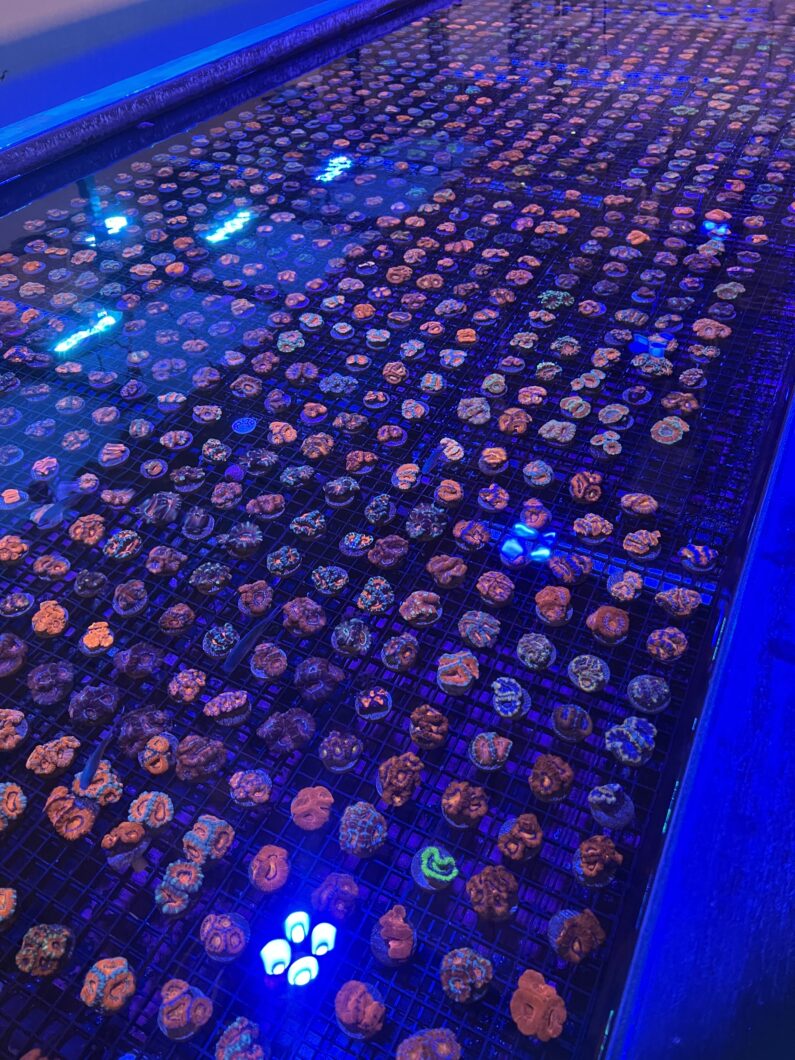
Corals rely on microscopic photosynthetic algae known as Symbiodiniaceae (formerly referred to as zooxanthellae) to produce much of the energy required for survival.
After fragmentation, these symbiotic algae continue supplying energy that supports tissue repair, skeletal growth, and the development of new polyps. In some cases, stressed corals may temporarily lose part of their symbiont population, making efficient photosynthesis even more important during recovery.
This is why lighting influences far more than coral coloration.
A well-balanced spectrum and appropriate light intensity help support photosynthesis during one of the coral’s most demanding biological processes.
Many experienced propagators gradually acclimate new frags to full lighting over the first week or two, reducing photo-stress, while allowing healing to progress naturally.
Professional coral farms understand this well.
Consistent lighting has become one of the foundations of successful propagation because every frag depends on stable conditions to recover efficiently and continue growing.
Preparing for Successful Fragging
Before propagating corals, experienced reefers usually have a few essentials already in place.
- Stable water parameters and a healthy, mature aquarium.
- Appropriate lighting and water flow to support recovery.
- Clean cutting tools, frag plugs, adhesives, and coral dip.
- A dedicated frag rack or frag tank whenever possible.
- A plan for future placement, trading, or growing out new colonies.
Starting with a stable system and a small number of frags allows hobbyists to gain experience, while minimizing unnecessary stress on both the corals and themselves.
Learning from Experienced Reefers
Fragging is a skill that improves with experience.
Fortunately, today’s reef-keeping community offers more educational resources than ever before. Reputable coral farmers, experienced hobbyists, reef clubs, and specialized forums provide valuable guidance that helps newcomers learn proper techniques before making their first cuts.
Beginning with hardy, fast-growing corals allows reefers to develop confidence before moving on to more delicate or slower-growing species.
Like every aspect of reef keeping, patience often becomes the most valuable tool.
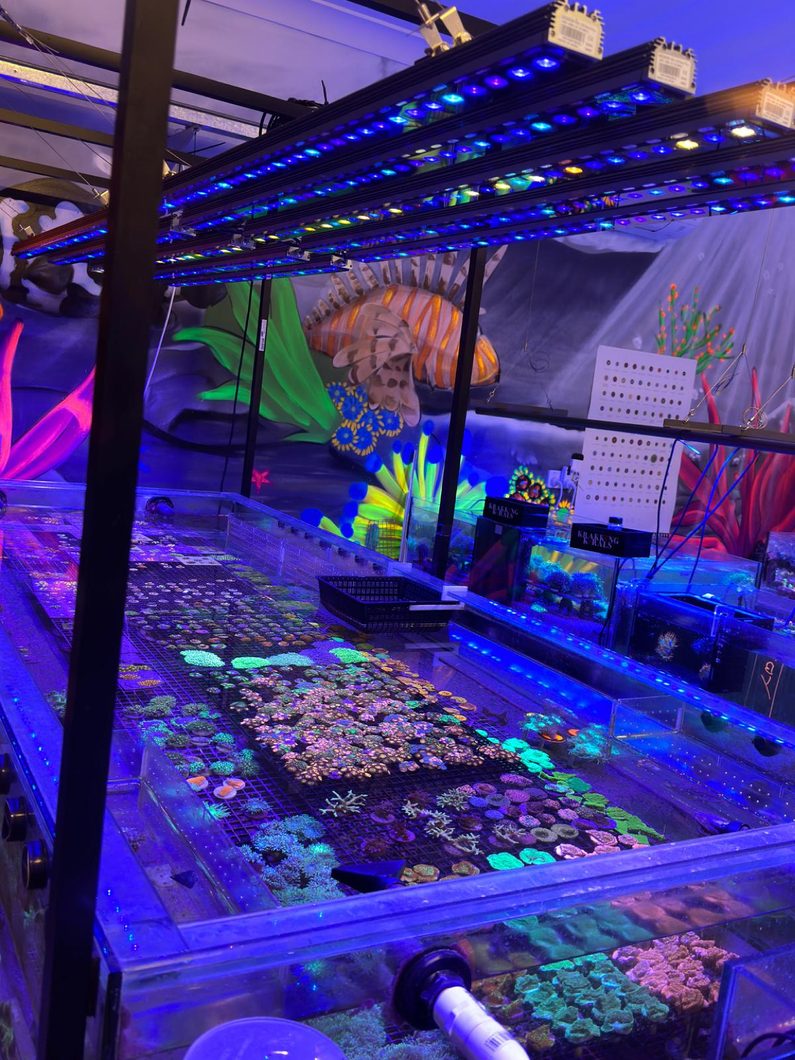
Orphek’s Osix dim controller and OR3 LED Bars coming from Krakking Korals.
Lighting That Supports Coral Propagation
Whether you visit a commercial coral farm, a public aquarium, a marine research laboratory, or a reef restoration facility, one principle remains consistent: healthy coral propagation depends on creating stable environmental conditions where corals can recover efficiently after fragmentation.
Lighting is a fundamental part of that environment.
Through years of collaboration with coral farms, public aquariums, research institutions, universities, and conservation projects around the world, Orphek has seen firsthand how proper spectrum, consistent intensity, and reliable performance contribute to healthier coral recovery and long-term growth.
That experience continues to guide the development of Orphek LED lighting systems.
Designed to deliver advanced spectral performance, exceptional stability, and precise control, they help provide the conditions that both professional propagators and reef hobbyists rely on when every frag matters.
Every Colony Starts Somewhere
Every thriving coral colony began as something much smaller.
Fragging is more than a technique for multiplying corals.
It is a way to manage growth, preserve valuable specimens, share with fellow reefers, support sustainable reef keeping, and gain a deeper appreciation for the remarkable biology of corals.
Whether your goal is building a larger reef, creating insurance frags for prized colonies, or simply experiencing the satisfaction of watching new life grow, propagation is one of the most rewarding skills you can develop.
And as countless professional coral farms and experienced reefers have discovered, providing corals with the right environment, including high-quality lighting, can make all the difference in helping every frag reach its full potential.
Orphek LED Solutions for Successful Coral Propagation
Orphek LED Solutions for Successful Coral Propagation
Freshly fragmented corals are at one of the most vulnerable stages of their life cycle. During the days and weeks that follow, they depend on stable water parameters, adequate flow, and perhaps most importantly, consistent lighting that supports photosynthesis without adding unnecessary stress.
This is especially important during the summer months. If your aquarium remains thermally stable, summer can be an excellent time to frag healthy colonies.
Fast-growing corals can be divided before they begin shading one another, giving new frags plenty of time to heal, encrust, and establish themselves before the seasonal changes of autumn.
The key is maintaining stable temperatures, excellent water quality, and appropriate light intensity throughout the recovery period.
For decades, Orphek has worked alongside coral farms, public aquariums, marine research institutions, universities, and reef restoration projects worldwide.
These collaborations have reinforced one fundamental principle: successful coral propagation begins with creating an environment where corals can recover naturally and continue growing with minimal stress.
That philosophy is reflected across every Orphek lighting solution.
OR4 iCon Blue Plus – Designed for Dedicated Frag Systems
For reef keepers who maintain dedicated frag tanks or coral grow-out systems, the OR4 iCon Blue Plus delivers the blue-rich spectrum favored by many professional propagators. Its independent channel control allows new frags to be introduced under lower light levels and gradually acclimated as they heal, reducing photo-stress while promoting healthy encrustation, coloration, and long-term growth.
OR4 iCon Reef Day – Balanced Lighting for Mixed Reef Propagation
If your frag system contains a variety of SPS, LPS, and soft corals, the OR4 iCon Reef Day provides a balanced daylight spectrum that closely resembles natural reef conditions. It offers excellent color rendition while delivering the uniform light distribution needed for healthy growth across a diverse collection of corals.
Natura iCon – Complete Lighting Control for Coral Growth
For hobbyists looking for a complete reef lighting solution, the Natura iCon combines Orphek’s advanced full-spectrum technology with intelligent control features designed to simplify coral care. Photoacclimation, customizable photoperiods, cloud simulation, lunar synchronization, and precise dimming allow reef keepers to create stable lighting conditions throughout every stage of coral propagation—from freshly cut frags to mature colonies.
Whether you’re creating your very first frag or expanding an established grow-out system, providing stable, biologically appropriate lighting is one of the best investments you can make. Healthy frags recover faster, encrust more reliably, and ultimately become the vibrant colonies that make reef keeping so rewarding.
With the right technique, stable water conditions, and lighting designed specifically for coral health, every frag has the opportunity to become the next centerpiece of your reef.
Related Articles You May Enjoy:
We invite you to explore and its exclusive contents.
We also would like to invite you to browse our website and participate with your Orphek experience.
Let us know about your tank and share it with other hobbyists in Orphek Facebook Group and Instagram!
Sharing is very easy! All you have to do is to send us the basic information about your tank, usually starting from the beginning (when you started your tank), what are you running in the tank, the living creatures you have in your tank and of course, pictures!
Subscribe to our youtube channel to watch our awesome videos and Orphek’s social medias to get the best of we can also offer!

“Together we protect Nature’s Biodiversity for generations to come”.
Loving Nature as we do and being environment sustainably conscious, Orphek only develops products with a significant positive impact in everyone’s life, therefore we only offer the best environmentally friendly solutions that combine the most advanced & efficient technology and, most importantly, aiming the well-being of animals and humans all together, for now and for generations to come.