Your Reef Tank Is Gossiping. In a hobbyist reef tank, that gossip stays in the water
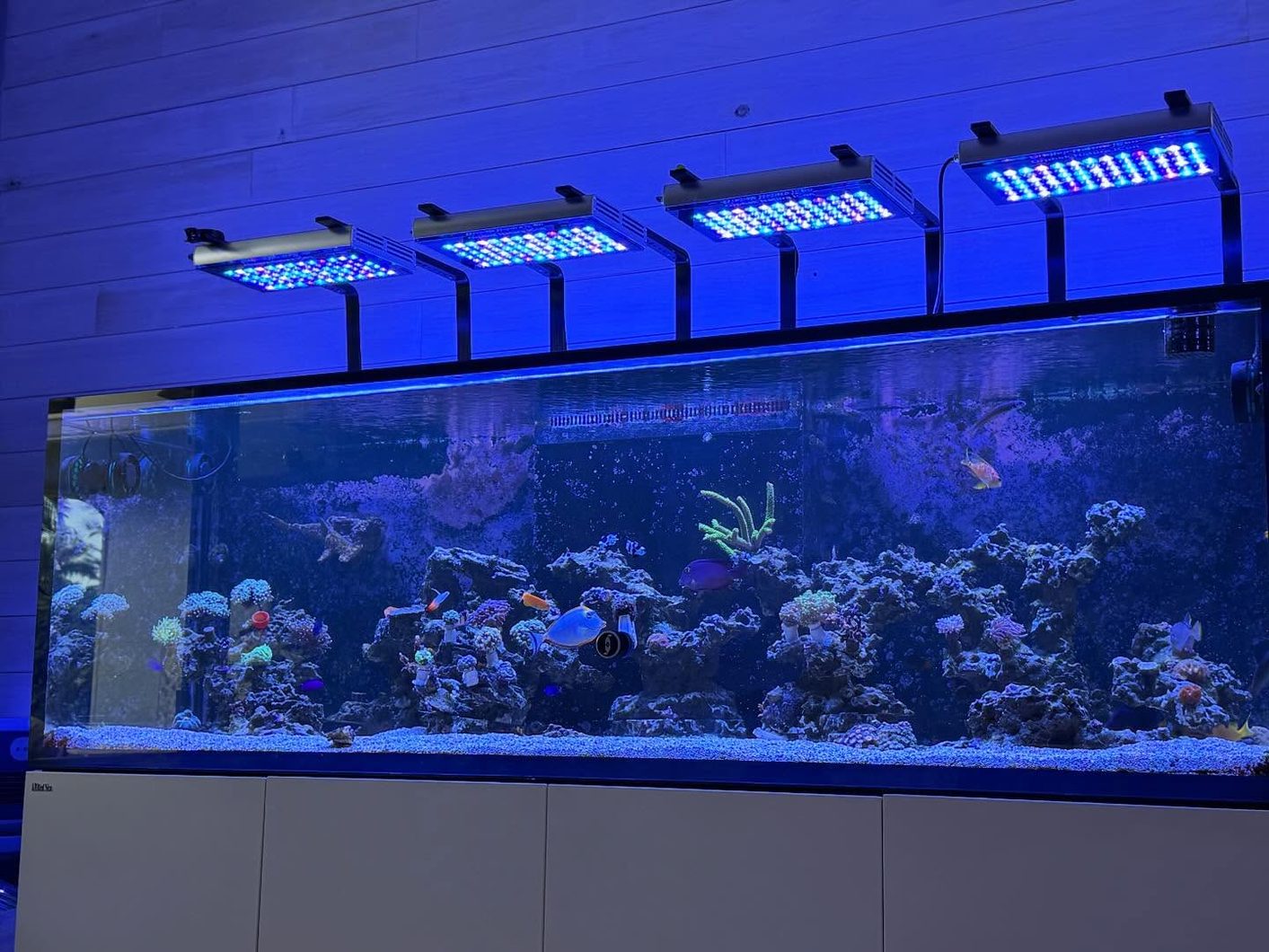
Your corals know something you don’t
Your reef tank looks peaceful… Corals sway in the flow. Fish go about their business. Equipment hums quietly in the background.
It seems silent… but it isn’t
Every day, corals, algae, bacteria, and countless microscopic organisms release chemicals into the water. Some are stress signals. Some are defensive compounds. Some attract beneficial microbes. Others may attract pathogens.
On a natural reef, these chemical messages are diluted into millions of litres of seawater.
In your aquarium, everybody reads them.
Your corals have no brains and no group chat. Yet they participate in a constant chemical exchange that influences the health of the entire system.
Seawater as a noticeboard
Reef-building corals are simple animals. They do not think, plan, or communicate the way humans do.
But they do interact with their environment through chemistry.
Corals release mucus, sugars, lipids, sulfur compounds, metabolites, and other molecules into the surrounding water. Bacteria respond to them. Algae respond to them. Nearby corals may be affected by them.
On a wild reef, these signals are quickly dispersed by currents.
In a home aquarium, the same water circulates through the display, overflow, sump, and return pump before passing every coral again.
Your tank is not a collection of separate organisms.
It is a shared chemical environment.
What the science actually says
Scientists have discovered that corals under stress can release increased amounts of dimethylsulfoniopropionate, or DMSP.
The coral animal itself can produce DMSP, not just its symbiotic algae. Research suggests it may help protect cells from oxidative stress during difficult conditions such as elevated temperatures.
Unfortunately, some pathogens appear to have learned how to exploit this signal.
Studies have shown that Vibrio coralliilyticus, a coral pathogen associated with disease outbreaks, can detect DMSP and move toward stressed corals. In effect, the compound may help the pathogen locate vulnerable hosts.
Corals also react quickly when physically injured.
Whether the damage comes from a grazing fish on a natural reef or a hobbyist cutting frags on the workbench, injured tissue can rapidly release defensive compounds into the surrounding water. This is part of the coral’s natural response to injury.
Researchers have even documented species of Acropora that chemically recruit gobies when toxic seaweeds begin to overgrow them. The coral releases compounds, the fish respond, and the seaweed problem gets trimmed back.
Most home aquariums do not have that exact partnership.
But they often have algae.
And they often have corals.
Which means chemical interactions are still taking place whether we notice them or not.
Even the famous partnership between corals and Symbiodiniaceae (the algae that provide much of a coral’s energy) is maintained through complex biochemical signalling. When that relationship breaks down, bleaching can occur.
None of this means corals are “talking” in the human sense.
It simply means molecules matter.
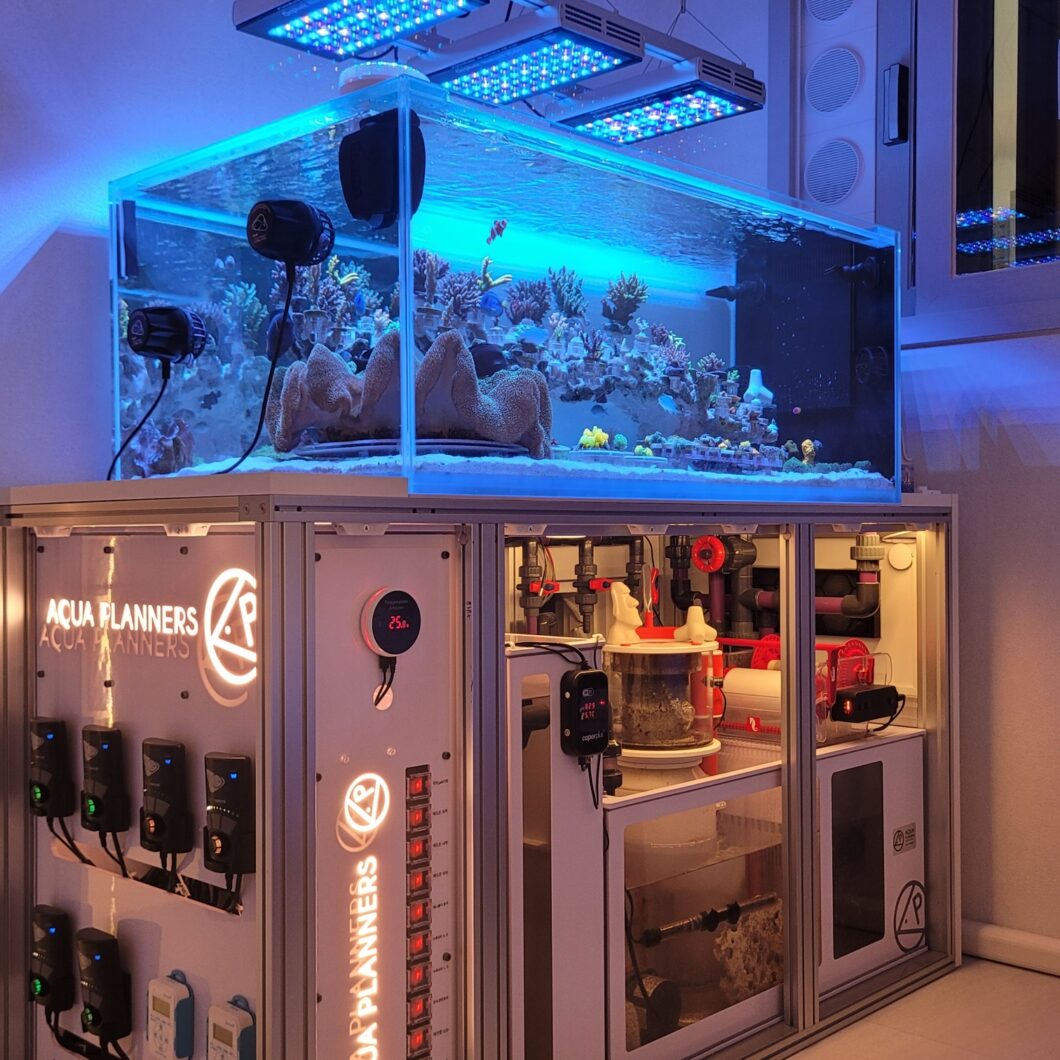
Why a home aquarium is a louder room
The ocean dilutes.
Your sump does not.
A stressed coral may release mucus, metabolites, bacteria, and stress-related compounds into a relatively small volume of water shared by every other inhabitant.
This does not mean a coral is sending a warning message to its neighbors.
But it does mean that one colony’s problems can influence the environment experienced by the rest of the system.
A declining coral affects more than itself
Most hobbyists have experienced this.
A coral begins to decline, tissue starts receding, and suddenly nearby colonies appear irritated or withdrawn.
The explanation is usually not mysterious coral telepathy.
More often, the system is responding to a combination of deteriorating tissue, microbial activity, dissolved organics, and changing water chemistry.
One stressed coral becomes everyone’s business.
Fragging is a chemical event
When we frag corals, we tend to think only about healing and infection.
But fragging also releases mucus and defensive compounds into the water.
This is one reason experienced reef keepers use clean tools, maintain strong flow, and avoid leaving freshly cut frags sitting in stagnant containers for extended periods.
The coral may recover quickly.
The chemistry takes a little longer to settle.
Allelopathy never disappeared
Long before reef hobbyists talked about microbiomes and coral signalling, they talked about allelopathy.
The concept remains relevant.
Soft corals, some LPS corals, macroalgae, and nuisance algae can release compounds that negatively affect nearby competitors.
On a natural reef, currents remove much of this chemical load.
In an aquarium, activated carbon, protein skimming, and water changes help perform the same function.
They do not just remove waste.
They help erase yesterday’s messages.
New arrivals bring more than pests
Quarantine is often discussed in terms of parasites and disease.
But new livestock also arrives carrying its own microbial community, mucus layer, and chemical signature.
Every coral, fish, and rock enters the aquarium as part of a living biological network.
Flow is part of the language
Water movement determines where these compounds travel.
Dead spots can allow metabolites and waste products to accumulate.
Excessively directional flow may concentrate one organism’s output directly onto another.
Flow is not just about oxygen and nutrient delivery.
It is also about distribution.
What this is not
Before we start imagining coral social networks, a reality check is important.
Scientists continue to study how neighboring corals respond to chemical cues, and many questions remain unanswered.
The evidence does not support the idea that your Montipora is warning your Acropora about next week’s temperature spike.
Good reef keeping still depends primarily on fundamentals:
- Stable temperature
- Appropriate lighting
- Consistent alkalinity
- Balanced nutrients
- Strong water movement
- Good husbandry
- Chemical interactions add another layer of complexity.
They do not replace the basics.
The ecosystem perspective
One of the biggest lessons from modern coral science is that a reef aquarium is not simply a collection of individual corals under lights.
It is an ecosystem.
Every feeding, every fragging session, every algae outbreak, every new livestock addition, and every water change alters the environment shared by hundreds of interconnected organisms.
The most successful reef keepers often stop thinking like collectors and start thinking like ecosystem managers.
That shift changes everything.
A short hobbyist summary
- Think of your aquarium water as a shared inbox.
- Remove dying or rapidly declining corals promptly.
- Use activated carbon and regular water changes to reduce accumulated compounds.
- Give chemically aggressive species adequate space.
- Frag corals using clean tools and good water movement.
- Quarantine new arrivals whenever possible.
When one coral suddenly fails, consider what entered the water, not just what happened under the lights.
Your display tank may be small compared to the ocean.
But the same biological rules still apply.
The organisms in your reef are constantly interacting with one another.
They just happen to speak a language that eventually ends up in you
Light Is the Stress You Can Schedule
You cannot carbon-filter a heat wave you created with a photoperiod that jumps 40% overnight.
DMSP, mucus, and allelochemicals are the reef’s language. In the ocean they dilute.
In your tank they loop through the return.
Heat, injury, and unstable light are three of the loudest ways corals start talking. You already quarantine and you already run carbon.
Light is the stressor you can schedule.
Natura iCon is built for that job: full-spectrum output meant for growth and color, tight dimming, sun-and-moon timing, and calendar control so the tank does not get a surprise dawn.
Stable intensity and a believable day/night cycle will not make corals mute.
They make fewer colonies dump stress chemistry because the sky in your living room stopped making sense.

What is Orphek talking about
A New Standard in Lunar Precision by Orphek
Lunar Brightness Control from 0.01% to 1.00%. More advanced than anything else!!
We are introducing a breakthrough technology that redefines how moonlight is controlled in reef aquariums!!
From evolution to revolution – Building on the unmatched controllability of the Orphek iCon ecosystem, we proudly introduce Lunar Mode Brightness Limit — an advanced feature that delivers unprecedented precision in nocturnal lighting management.
For the first time, users can define a maximum brightness limit for each individual channel during Lunar Mode, allowing moonlight to be fine-tuned with extraordinary accuracy and biological relevance.
What Lunar Mode Brightness Limit Delivers:
- Per-channel lunar brightness control from 0.01% to 1.00%
- Immediate, real-time application of all adjustments
- Full integration with Sun & Moon Synchronization
- Improved stability of coral circadian and lunar rhythms
- Exceptional precision for research facilities, coral farming, and advanced reef systems
This innovation elevates lunar lighting control beyond traditional intensity curves, delivering true biological precision aligned with natural lunar conditions.
And unlike conventional moonlight settings, Lunar Mode Brightness Limit ensures that nocturnal illumination never exceeds biologically appropriate thresholds, supporting coral health, natural nocturnal behavior, and spawning cues — while eliminating the risks associated with excessive nighttime light exposure.
Moonlight is not decorative. It is a biological signal!
We did not stop there! There is more!
Introducing also at first for the Reef Industry: The iCon Calendar for Coral Spawning!
The iCon platform takes a historic leap forward with a fully integrated Calendar System for seasonal coral spawning control.
For the first time, hobbyists and professionals can:
- Select the start date of the sun–moon synchronization cycle
- Match natural environmental cues with seasonal coral reproduction
- Recreate the exact timing conditions that trigger spawning events in nature
This opens a new frontier—once reserved for marine laboratories—now accessible to dedicated reef keepers at home!
Reef aquarists can finally push their skills to an entirely new level with scientifically accurate environmental reproduction.
Innovative Technology for Every Reef Enthusiast
Whether you’re a passionate beginner or a seasoned professional, Orphek believes everyone has a role in reef conservation.
And the Natura iCon embodies this belief, delivering cutting-edge science and effortless usability in one system.
Our LED solutions empower you to:
- Achieve exceptional coral coloration
- Promote strong and balanced growth
- Create authentic, nature-inspired environments
- Support healthier reef ecosystems
- Redefine Your Reef Experience
Welcome to Orphek—where nature, technology, and design come together with purpose.
We invite you to explore our innovations, our mission, and the groundbreaking work we lead around the world.
With the Natura iCon, your aquarium is no longer just a tank. It becomes part of a global movement. A living statement of what’s possible when science and passion meet.
From evolution to revolution—your reef’s future begins now!
To read deep dive in the Lunar Brightness Control Feature – Beyond Sun & Moon Synchronization: Orphek App Launches Advanced Lunar Brightness Control

“Together we protect Nature’s Biodiversity for generations to come”.