Orphek celebrates National Science Week 2026 by exploring sawfish, shark and ray conservation, marine science, research and the questions that drive discovery.
Science rarely begins with an answer. It begins with curiosity.
Why is a species disappearing? Where does it go? What does it need to survive? What have we overlooked?
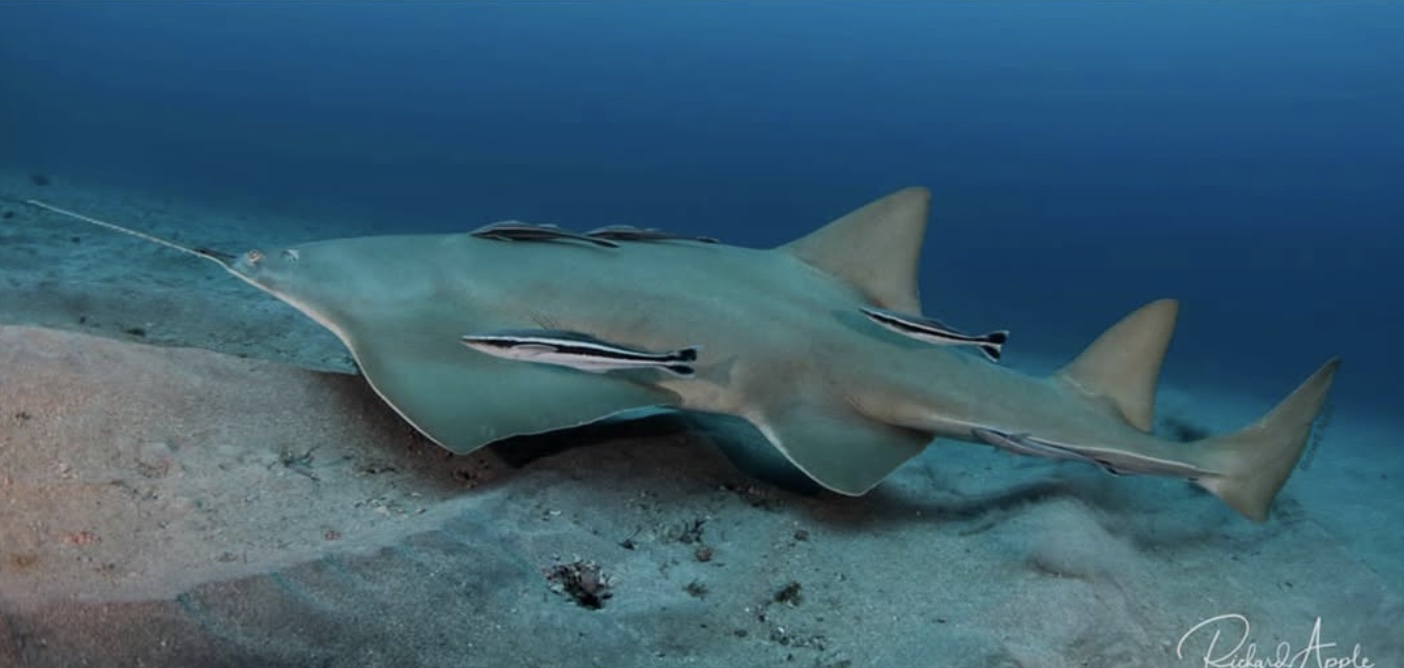
*Sawfish offer a remarkable example.
These extraordinary shark-like rays have survived for millions of years, yet today they are among the most threatened groups of marine fishes.
Their decline is linked to pressures including fishing and habitat loss.
But knowing that a species is disappearing is only the beginning.
The more important question is: where does it still have a chance?
Looking Beyond the Animal
Research in Western Australia has shown how important this question can be.
The Fitzroy River provides important nursery habitat for freshwater sawfish, particularly young individuals.
Understanding where these animals move and how they use their habitat helps researchers identify what needs to be protected.
This changes the conservation conversation.
Protecting a species is not simply about protecting the animal. It means protecting the places where it is born, grows, feeds and moves, and understanding what happens when those places change.
From Questions to Conservation
A researcher may begin with a seemingly simple question:
Where do young sawfish go?
The answer can reveal the importance of an entire river system.
Another question: why are they disappearing from places where they once lived?
It can lead to research into fishing pressure, habitat degradation, migration barriers and water quality.
One question leads to another. Slowly, a larger picture emerges.
That is how marine science grows: through observation, evidence, collaboration and the willingness to keep asking questions.
What Reef Keepers Can Learn
The same spirit of curiosity exists in the reef aquarium.
Why does a coral extend its polyps at night? Why does one colony grow differently from another? Why does a fish behave differently after the lights go out? Why does a coral change color?
These observations may seem small, but they can lead to a deeper understanding of the living system in front of us.
An aquarium is not just something to look at. It can also be something to learn from.
The ocean needs curiosity.
Before we can protect what we love, we have to understand it.
And before we can understand it, we have to ask:
Why?
For National Science Week 2026, we celebrate the researchers who keep asking questions—and the discoveries that begin with them.
Orphek & Science
Orphek explores the science, biology and natural history behind the living reef—from the organisms we keep in our aquariums to the ecosystems that inspire them.
Our fascination with sharks and rays extends beyond the pages of The Orphek Reef Journal. Today, Orphek LED lighting illuminates shark habitats in leading public aquariums around the world, including SeaWorld San Diego (USA), Aquarium de Biarritz in France, Palma Aquarium’s iconic Big Blue—Europe’s deepest shark tank—and Nausicaá’s High Seas exhibit, home to one of Europe’s largest marine ecosystems.
Orphek is also helping support shark & ray habitats across the Middle East, with lighting projects at Dubai Aquarium & Underwater Zoo, The Lost Chambers Aquarium and The Ambassador Lagoon in Dubai, as well as The Scientific Center (TSCK) in Kuwait and other major marine facilities across the region.
Beyond public aquariums, Orphek has also partnered with The Shark Institute to develop a customized LED lighting solution that helps researchers observe and photograph whale sharks feeding at night in the wild. These collaborations reflect our commitment to advancing marine research, public education, and a deeper understanding of the ocean’s most extraordinary inhabitants.
For National Science Week 2026, we celebrate the researchers who keep asking questions—and the discoveries that begin with them.
*Sawfish are large rays characterized by an elongated, flattened rostrum equipped with sharp, white, peg-like teeth along each side. Sawfish can reach lengths of up to 7.6 meters (25 feet).
They inhabit shallow coastal marine waters, typically over sandy or muddy bottoms and sometimes in seagrass beds, generally from the intertidal zone down to about 20 meters (65 feet).
it looks like a shark… but it is a type of Ray!

“Together we protect Nature’s Biodiversity for generations to come”.