About Light, Coral, Photosynthesis and the Ingredients for Good Coral Growth and Color
Many factors can affect coral growth; lighting, water temperature, feeding strategies, and water chemistry all have an affect coral growth and their appearance. Proper lighting is one of the most important ingredients for successfully growing corals in a reef aquarium. The Zooxanthellae that live in coral tissue depend heavily on specific types of light energy to flourish in a symbiotic relationship with the host coral. The Zooxanthellae provide food for the coral, and in return, the coral provides protection from would be herbivores. The lighting we provide for the reef aquarium must closely mimic the wavelengths and intensity found on the reefs to offer the same benefit to the corals as in their natural habitat.
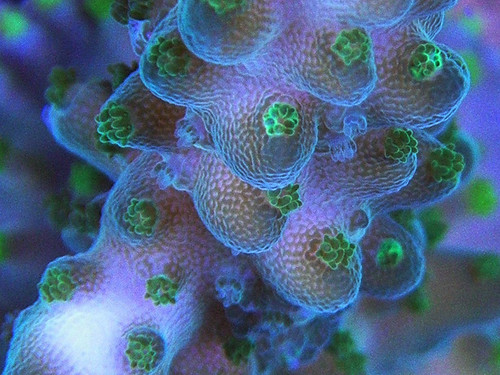
There are some properties of light that should be considered when one wishes to successfully maintain and grow corals.
Lumens, PAR, and Wavelengths
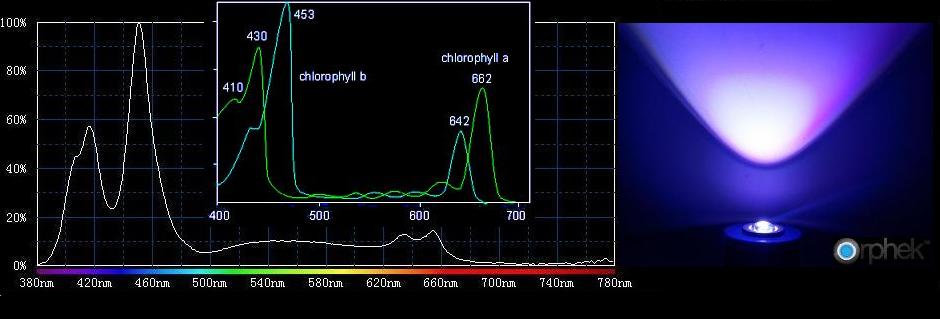
A Lumen is a measure of the total amount of visible light emitted by a source. Luminous flux differs from power or radiant flux in that luminous flux measurements reflect the varying sensitivity of the human eye to different wavelengths of light, while radiant flux measurements indicate the total power of all light emitted, independent of the eye’s ability to perceive it. The more lumens, the brighter or more intense the light looks to the human eye. A Lumen meter can be a useful tool for determining when lamps are getting old and need to be replaced, but for reef systems, a PAR (Photosynthetic Available Radiation) measurement is much more useful as most affordable lumen meters only measure the intensity of wavelengths up to 580 nanometers. PAR meters will measure the entire spectrum visible to the human eye which is between 400 to 700 nanometers. This is more accurate considering that corals respond best to wavelengths between 400-550 nanometers and 620-700 nanometers. These wavelengths are called PUR (Photosynthetic Useable Radiation), and this is the most desirable spectrum for growing corals. You can see by the spectrograph below, that our LED systems mimic this PUR spectrum very well. The chlorophyll A and B is finely tuned to provide peaks in those wavelengths which accelerate photosynthesis thereby yielding a higher production of the food source corals require for accelerated growth.
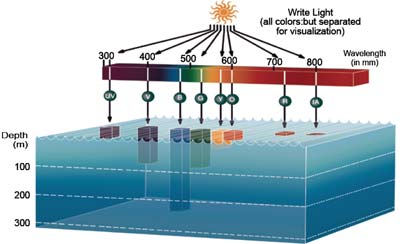
Light is energy and travels in light waves. The wavelength of light is measured in nanometers, with violet and blue at the lower end of the visible spectrum (400-470nm) and the red is at the higher end (at around 700nm). Wavelengths below 400 nanometers are considered UV or ultra violet. Above 700 nanometers light is considered infrared. The color spectrum is very important for coral growth in your aquarium because certain wavelengths are more beneficial to coral than others.
Corals found in shallow reefs and tide pools receive a greater portion of the light spectrum and intensity of natural sunlight because there is not enough water to significantly filter the light (water absorbs certain wavelengths of light more readily than others). Blue light penetrates the deepest and that is why the water appears bluish at deeper depths. Corals found in deeper parts of the reef depend on more of the blue spectrum and less intense light.
Orphek LED Lighting Solutions are designed with the perfect light spread & penetration so that corals can be illuminated effectively in deeper aquariums without the need for metal halide or HQI lamps which run hot, use much more energy, add heat to the water, and generally need replacing every 8 months.
Temperature
Zooxanthellae are not very adaptive when it comes to water temperature; they do best at temperatures between 23-28 C (73-82 F). These algae also need a good amount of light which is why shallow coral reefs are only found in tropical clear waters where temperatures do not fluctuate too much during the year. In the summer, temperatures sometimes get above30 C (86 F), causing the Zooxanthellae to die off. As a result, the corals expel these symbiotic algae. This is called bleaching, and it is now a common process which occurs on many coral reefs.
Global warming has caused summer temperatures to become higher, and for longer periods of time. The corals and the Zooxanthellae have difficulty in adapting to this fast changing climate. It is therefore important that we try to slow down climate change by reducing the amount of greenhouse gases we produce. Metal halide and HQI (High Quartz Iodide) light systems that are used on deeper aquariums generate high heat and can rapidly change the temperature of the aquarium without a means of cooling the water. Our LED systems reduce heat by a large margin and eliminate the extra cost of energy needed to drive traditional lighting systems. The high cost of chillers which are used to control the temperature of the water adds another expense to the system.
By choosing an Orphek aquarium LED lighting system, you will spend less money to maintain the proper temperature of your aquarium and eliminate any chance of coral bleaching due to elevated temperatures. Basically, this means that by choosing an Orphek aquarium LED lighting system, your corals will grow faster, and their colors will be more colorful and more intense!
Additives for Enhancing Coral Growth and Color
Orphek’s lab is always experimenting with lighting and additives to achieve good coral growth rate as well as coloration. No expense is spared in conducting these experiments as we wish all of our clients can have the same success we witness in our lab aquariums.
Although Orphek LED lighting is the most important factor for coral growth, additives must also be added to replenish the elements that are absorbed by the corals. Without these elements, growth will be very slow or even cease with some corals. Calcium and magnesium are the two most important elements to maintain and they must be kept at a three to one ratio.
A calcium level of 400-450ppm and a magnesium level of 1200-1300ppm should be your target goal. If magnesium levels are low, corals have difficulty in absorbing the calcium they require. For example; If we have a calcium level of 400ppm, but magnesium is only at 600ppm, only one half (200ppm) of the calcium present will be available for the corals to absorb. This is why magnesium is added to medications used to treat Osteoporosis in humans.
The medication contains calcium and in order for the body to absorb it, magnesium must be present in the same three to one ratio. Calcium and dKH are intimately related, one can affect the other. Keeping dKH levels at 7-9 is highly recommended. Too high a dKH will cause calcium to precipitate out of solution.
Strontium levels in seawater are 8.1ppm and are just as essential for the growth and well being of reef-building corals as calcium. Strontium is supplied to the corals with the help of the zooxanthellae that live symbiotically within them. Dosing this element on a weekly basis is recommended.
Potassium levels in seawater are 392ppm and are an important component of aragonite. Potassium is the mineral secreted as skeletal material by corals and other reef-building marine organisms and is complexed into pigments that enhance blue coloration of some species of small polyp stony corals (SPS). This element increases the color in colors when dosed regularly.
Ferrum (iron) is a minor trace element present in seawater at 0.0034ppm. Iron is utilized in the transport chain within the chloroplasts and is therefore required by photosynthetic organisms for continued functioning and health. In marine aquaria, these organisms include macroalgae, calcareous algae, and the symbiotic zooxanthellae that reside within the tissues of reef-building corals and also utilized by clams, and some sponges. Supplementing iron at a higher level (.05-.10ppm) than found in natural seawater enhances growth but exceeding this level is not recommended. This supplement is particularly useful in aquariums utilizing a refugium with a mud substrate such as Miracle Mud.
Foods for corals are widely available and in many forms; liquids, powders, and live foods. Most corals derive much of their food requirements through photosynthesis whereby the zooxanthellae that reside within their tissue provide the food source for them. This food source alone, and in captive systems, is not enough nourishment to grow coral. Although it will keep coral alive, other food sources are required to obtain a reasonable growth rate and good coloration. I will provide a link to an article written by Bob Fenner titled “Stony Coral Feeding in Marine Aquarium Use.” http://www.wetwebmedia.com/corlfeeding.htm
We have asked 2 clients of Orphek LED products for their tips on growing corals and have placed a few responses below.
“My advice to anyone is first to get your nitrate and phosphates to undetectable levels. Preferably using a Hanna Phosphate checker to measure and ensure your phosphates read 0.00ppm. I dose Lugol’s iodine solution daily, every 4 days I add Brightwells Potassium powder. You need to though watch for signs of overdosing, for this I keep an eye on my yellow acro which will get a green shine if too much Iodine is being added. It’s best to dose and visually learn these telltale signs so as to strike a happy medium between your dosing regime and your corals. The other additive I use now and then, again works best when your nutrient levels are low and phosphates are undetectable, is to add KZ Zeospur. But do use sparingly at first, as it can cause damage if applied incorrectly. If corals look too pale, adding KZ Pohls Extra, will help with the enrichment of colors. Amino acids are also a good additive especially for nutrient starved systems, but again, will only add real value if your system is devoid of nutrients where you corals start have that pale starve look.
I believe then that, once u have your water parameters right, then will lighting start to add the real benefits to your SPS coloring up, much more than that of a system that is carrying nutrients and elevated phosphate levels. Regards, Adrian”
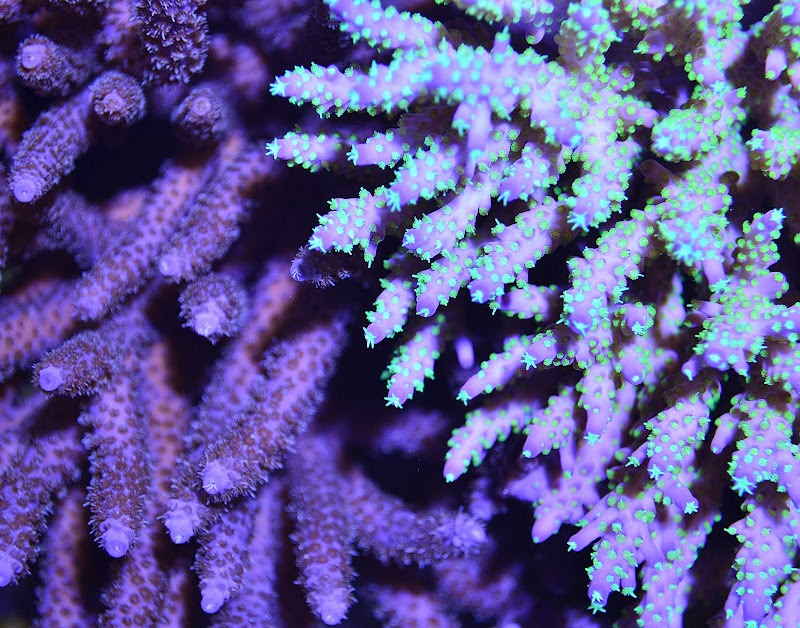
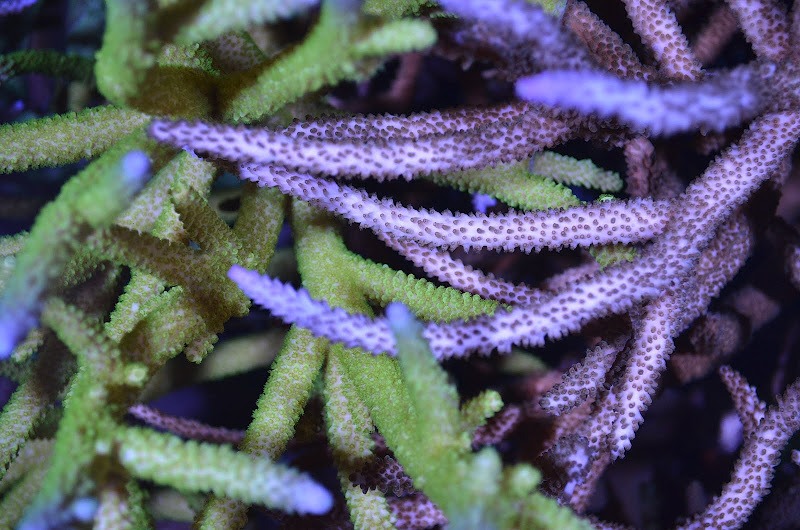
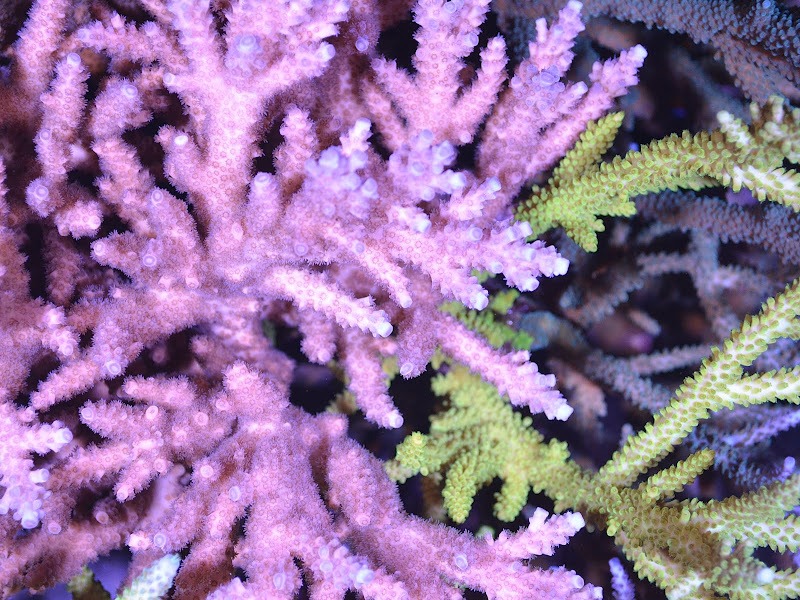
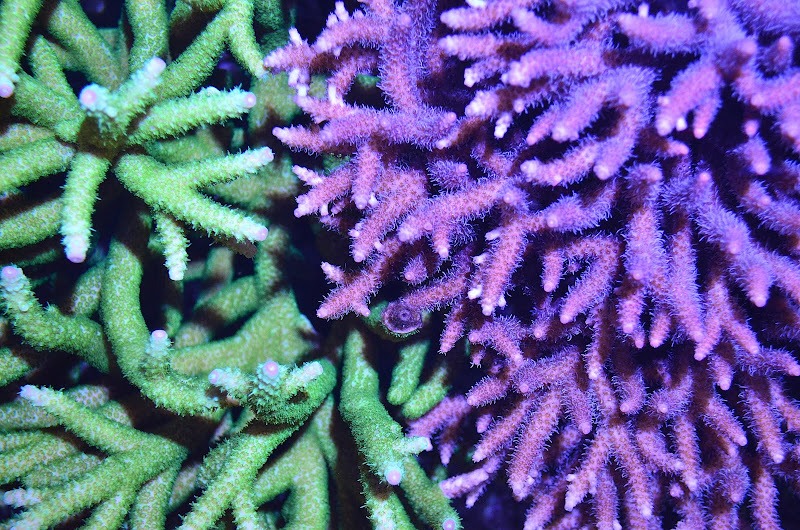
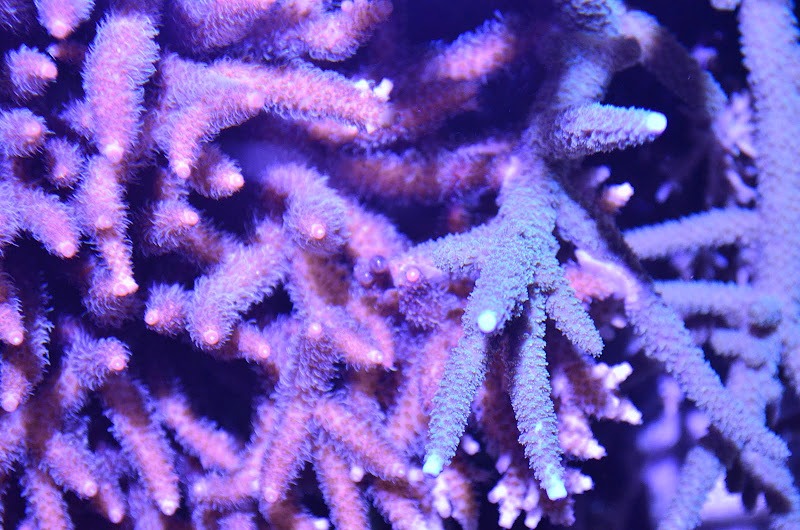
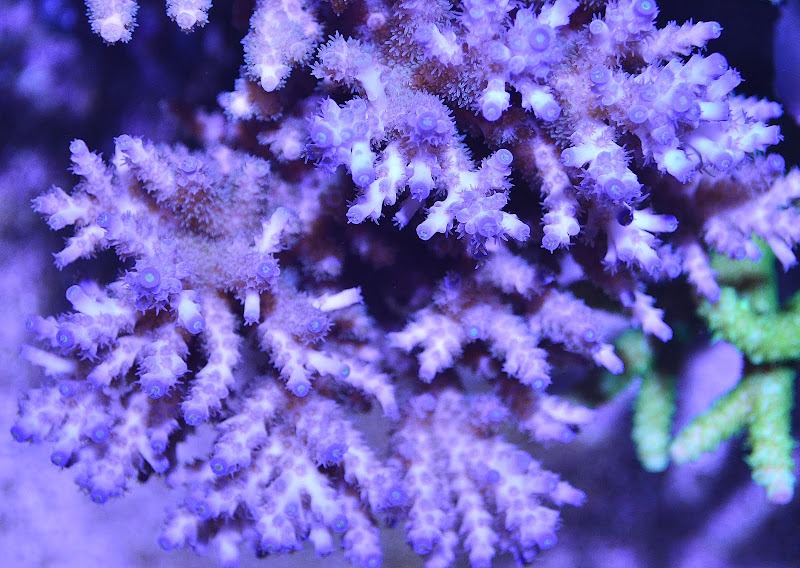
“Happy to give you some tips. Establishing an abundant and healthy Symbiodinium population is essential for maintaining deep colours in corals. This can be achieved by avoiding conditions which can cause bleaching (high temperature, high light (especially UV), pollutants, disease outbreaks, etc), but by also building resilience in the coral-algal symbiosis. Photosynthesis in the algal symbionts is essential for providing the animal host with an autotrophic source of nutrition. Up to 95% of the photosynthate produced by the symbionts is translocated to the animal, and this is the reason why coral reefs are so abundant in nutrient waters of the tropical oceans. However, by supplementing the energy produced through photosynthesis, by providing a heterotrophic food source, the health of both partners in the coral symbiosis is improved. Heterotrophic food sources, such as brine shrimp, are captured by the coral polyps and once digested supply a rich source of organic compounds of nitrogen, phosphorus as well as fatty acids, which are not available through autotrophic nutrition. In corals which are grown under optimal irradiance conditions and supplemented with heterotrophic food, colours are much deeper due to the more abundant population of Symbiodinium and/or the greater concentration of photosynthetic pigments (chlorophyll and peridinin) per algal cell. This colour is also sustained during periods of mild or shot-term stress as the coral is more resilient against bleaching. This is one suggestion on how coral color can be improved for those who presently only supply an autotrophic nutritional food source. Cheers, Ross”
You can also find more info here: