How light, nutrition, and nighttime observation reveal the complex biology behind thriving corals
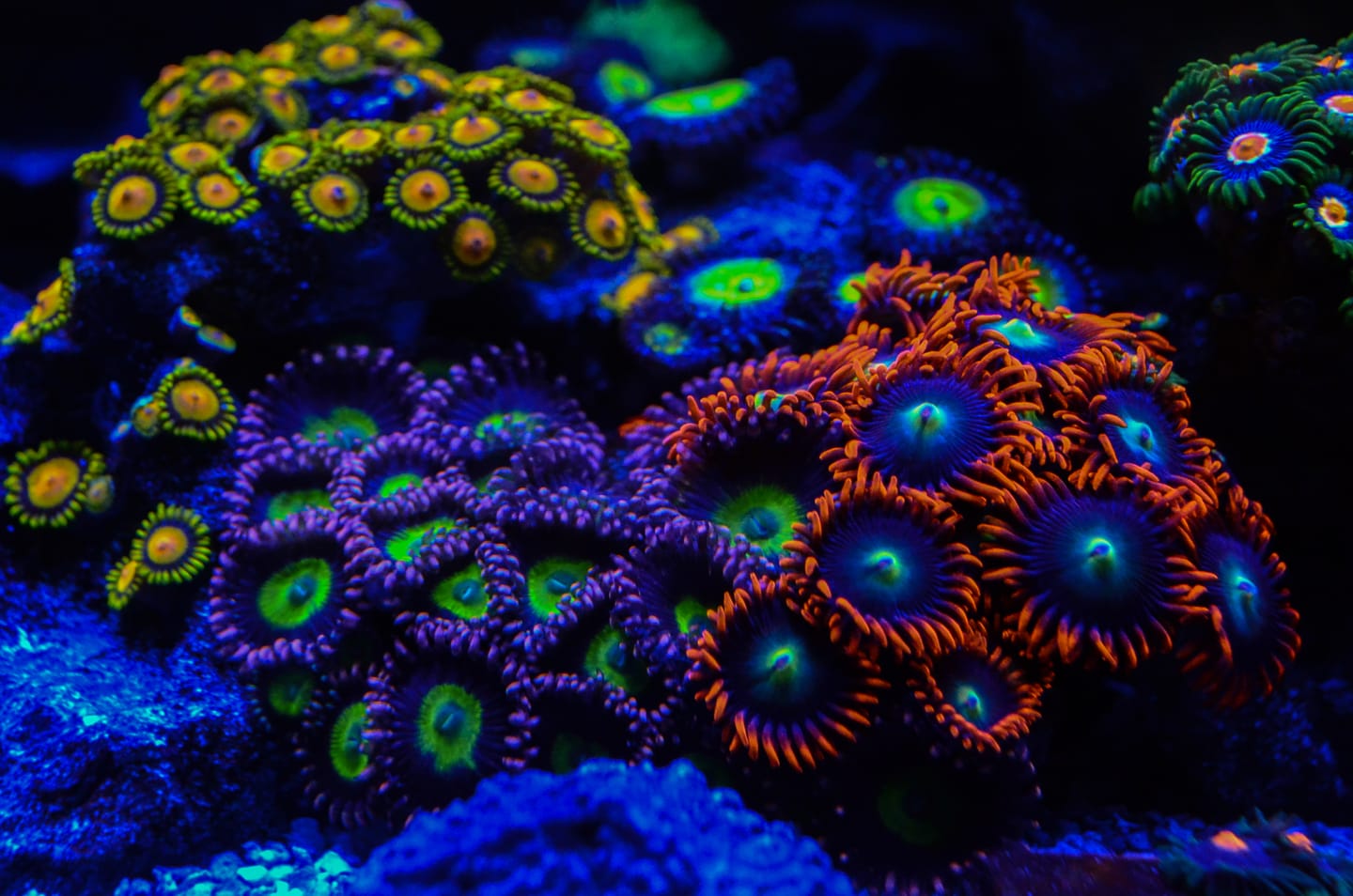
When reef keepers think about coral health, one element usually comes first:
Light.
And for good reason.
Light is one of the most important factors in maintaining a successful reef aquarium.
It fuels photosynthesis, supports the relationship between corals and their symbiotic algae, influences coloration, and helps create the vibrant displays that make reef tanks so fascinating.
But light is only part of the story.
Corals are not simply organisms that absorb energy from the sun.
They are animals.
And like all animals, they need nutrition.
The relationship between light and feeding is one of the most fascinating aspects of coral biology, revealing just how complex and adaptable these remarkable organisms truly are.
Corals Have More Than One Source of Energy
Most reef-building corals live in partnership with microscopic algae called coral symbionts.
Through photosynthesis, these symbiotic organisms transform light energy into chemical energy that supports the coral host.
This partnership is one of nature’s greatest examples of cooperation and is fundamental to the productivity of tropical coral reefs.
However, photosynthesis does not provide everything a coral needs.
Corals also obtain nutrients by capturing food from their environment, including plankton, organic particles, and other microscopic sources of nutrition.
In the ocean, corals benefit from a constant supply of both:
Energy from light.
Nutrition from the surrounding water.
A healthy reef ecosystem depends on the balance between these two worlds.
Feeding Is Part of Coral Biology
In aquariums, feeding corals is sometimes viewed as an additional technique used by experienced hobbyists.
In nature, however, feeding is simply part of how corals survive.
Many coral species have specialized structures for capturing food. Their tentacles can extend into the water column, allowing them to collect passing particles and microscopic prey.
This behavior is not random.
It is an evolved response to the environment around them, influenced by water movement, food availability, biological rhythms, and the daily cycle of the reef.
Understanding this behavior can change the way we look at coral care.
Feeding is not simply something we add to an aquarium routine. It is part of the biology we are trying to support.
The Reef Does Not Stop Changing When the Lights Turn Off
One of the most overlooked aspects of reef keeping is what happens after sunset.
During the day, aquariums are usually appreciated for their colors, movement, and visual beauty. But nighttime reveals another dimension of the reef.
Many corals display different behaviors after dark, including increased tentacle extension and greater interaction with particles in the water column.
The environment changes as well.
Small organisms become more active, feeding opportunities shift, and behaviors that are easy to miss during the day can become much more apparent.
The reef we see under daytime lighting is therefore only one expression of a much larger biological system.
Observation Really Matters
Successful reef keeping is not only about adding equipment, adjusting settings, or following established routines.
It is also about learning to observe.
A coral can communicate through subtle changes:
- the way its polyps extend
- how it responds to food
- changes in coloration
- differences between day and night behavior
These observations can help reef keepers recognize patterns and better understand the organisms in their care.
Observation turns reef keeping from a routine into a relationship.
The Role of Blue Light in Discovering the Hidden Reef
The underwater world is strongly influenced by blue wavelengths because water absorbs longer wavelengths of light as depth increases.
As a result, many marine organisms have evolved within an environment where blue light plays an important role.
For reef keepers, controlled blue illumination provides an opportunity to observe aspects of coral biology that may be less visible under normal aquarium lighting.
Under blue light, hobbyists can discover:
- coral fluorescence
- feeding responses
- nighttime activity
- differences between coral species
- details of colonies that may otherwise remain unnoticed
This does not mean that blue light replaces the aquarium’s primary lighting. Rather, it offers another way of looking at the reef.
The daytime reef is only part of the story.
Light and Feeding: Two Sides of Coral Care
A thriving reef aquarium does not depend on a single factor.
Lighting, nutrition, water quality, flow, and stability all work together.
The goal is not simply to provide more light or more food.
It is to understand how these elements interact.
Corals have evolved over millions of years in a dynamic environment where sunlight, currents, nutrients, and biological rhythms are constantly connected.
The closer we come to understanding these relationships, the closer we come to appreciating the complexity of natural reefs.
Seeing the Reef Differently
Every reef aquarium contains a world of activity that is easy to overlook.
The colors we admire are only one expression of coral life. Behind them are complex biological processes: photosynthesis, feeding, adaptation, and interaction with the surrounding ecosystem.
Learning to observe these behaviors allows us to appreciate corals not only as beautiful animals, but as sophisticated living organisms.
Because the more we understand the reef, the better we can care for it.
And the better we understand the organisms that depend on these ecosystems, the more meaningful our efforts to protect them become.
Seeing What the Reef Reveals After Dark with Orphek Azurelite
Understanding coral behavior requires more than providing the right conditions. It also requires paying attention to what happens within the reef.
For many reef keepers, some of the most fascinating observations happen after dark, when corals and other reef organisms reveal behaviors that are difficult to appreciate during normal viewing hours.
Under appropriate blue illumination, fluorescence, polyp extension, feeding responses, and other nighttime activity become easier to observe.
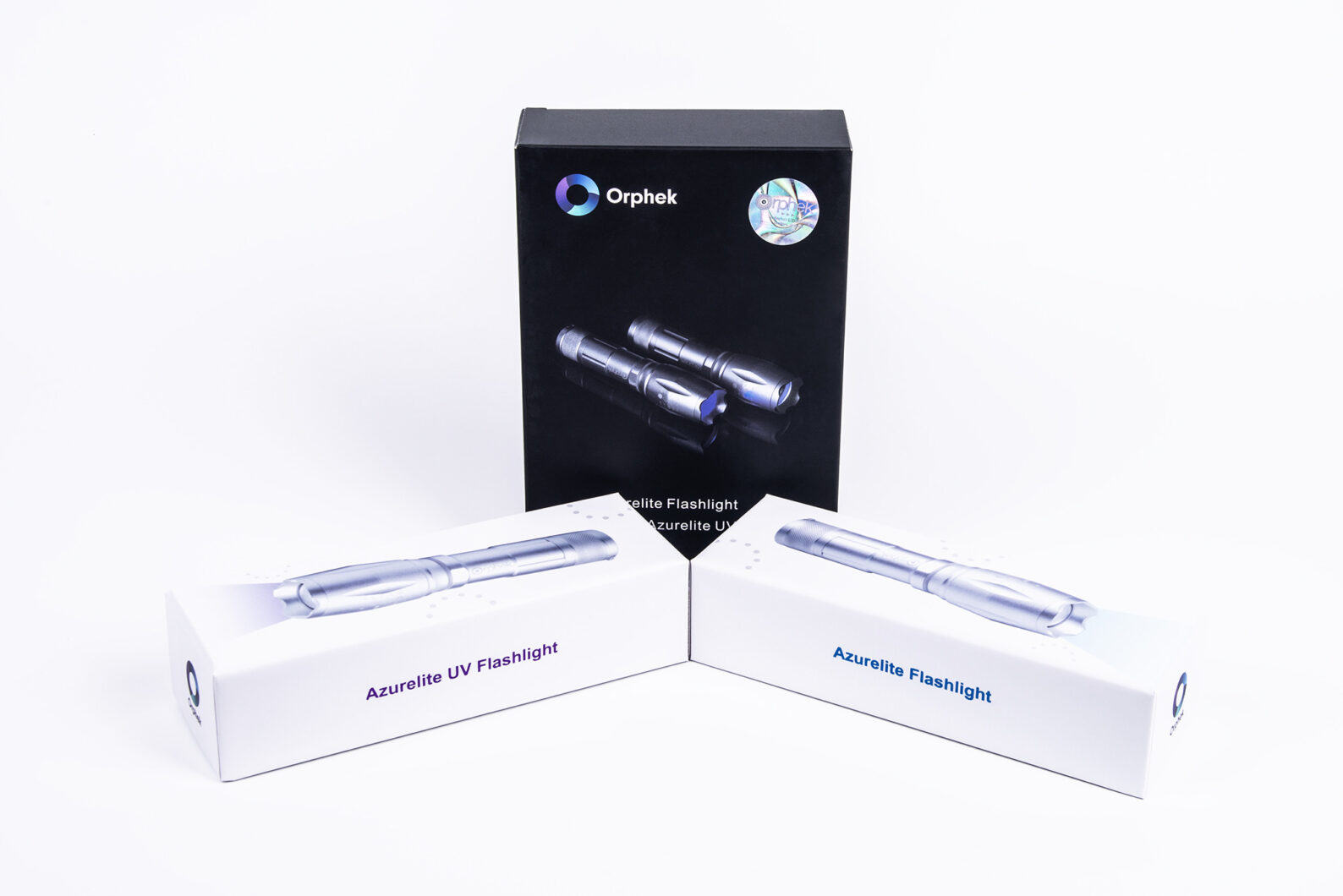
For reef keepers who enjoy exploring their aquarium beyond the daytime photoperiod, Orphek Azurelite was developed as a specialized blue-spectrum flashlight for coral feeding observation, fluorescence viewing, and nighttime reef inspection.
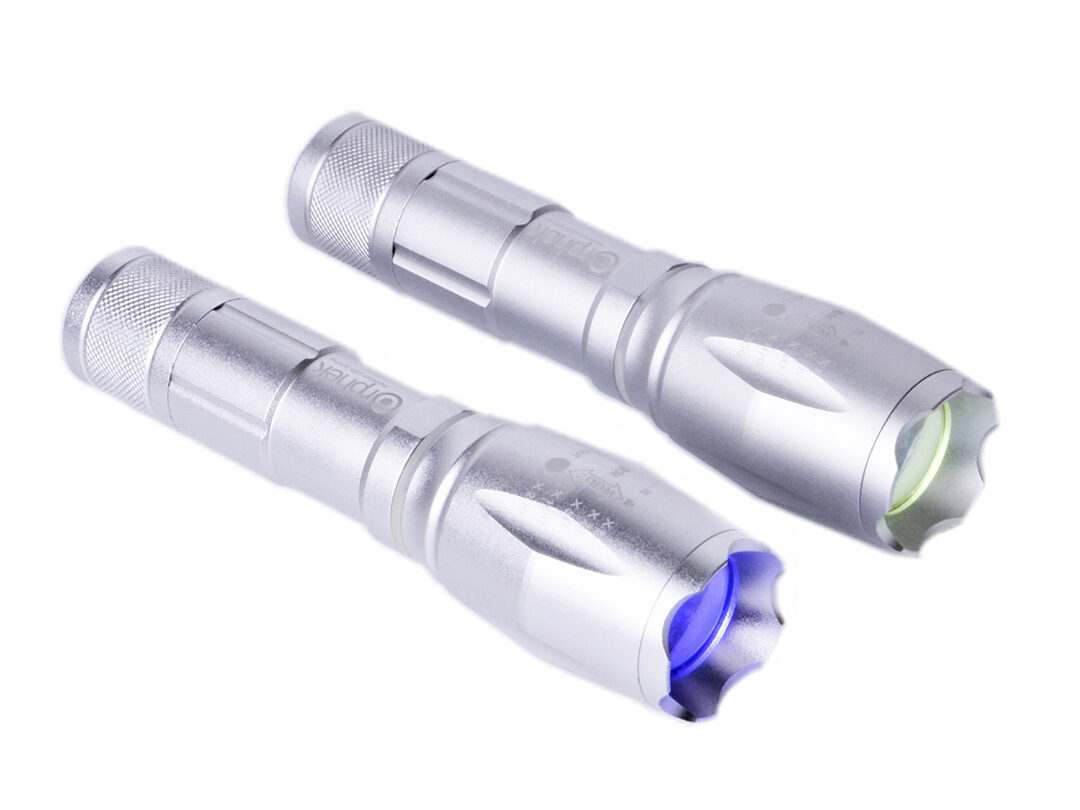
During feeding sessions, Azurelite can help reveal coral feeding responses and polyp extension while allowing hobbyists to observe nocturnal activity that might otherwise go unnoticed.
Its concentrated blue spectrum also enhances coral fluorescence, revealing colors and details that are difficult to appreciate under standard aquarium lighting.
For an even broader approach to reef observation, the Azurelite Combo combines the Azurelite Blue and Azurelite UV flashlights.
Together, they provide additional capabilities for coral feeding observation, fluorescence enhancement, nighttime viewing, photography, and coral health inspection.
The daytime reef is only part of the story.
Sometimes, the most fascinating moments happen after dark.